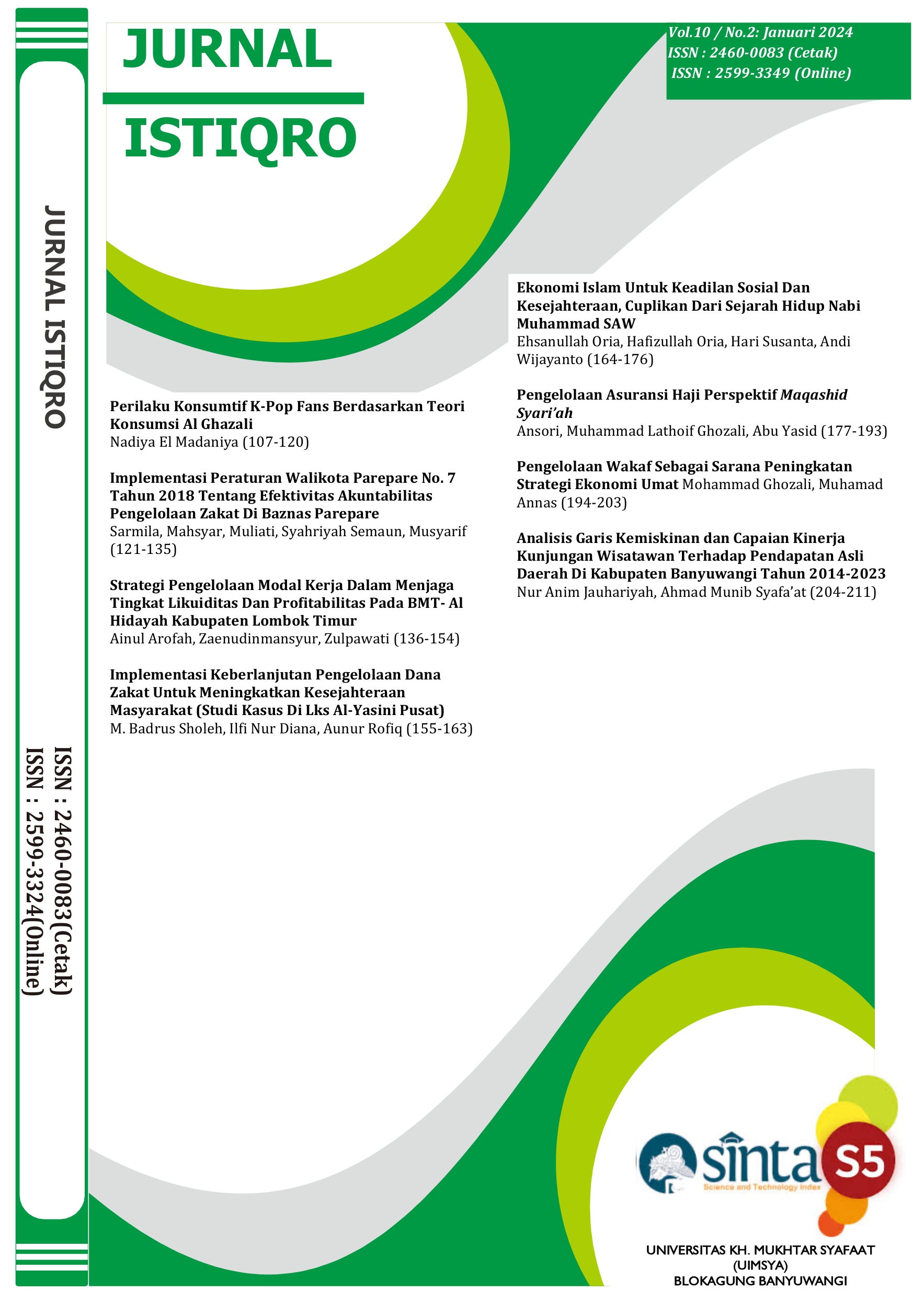
PENGELOLAAN WAKAF SEBAGAI SARANA PENINGKATAN STRATEGI EKONOMI UMAT
DOI:
https://doi.org/10.30739/istiqro.v10i2.3237Keywords:
Strategy, Waqf, and EconomyAbstract
Waqf is one of the instruments in the sharia economy that has the potential to improve the welfare of the community. As an economic instrument waqf also plays a role to support various productive activities and redistribution of welfare to underprivileged communities and play a role in the development of the social, economic, and cultural life of the community. Also, in Islam waqf becomes a more expensive instrument to invite its managers to have an entrepreneurial spirit where waqf assets as capital and the result of the management of waqf property is used for the economic development of the community. This study aims to find out how waqf management strategy and how the role of waqf in improving the economy of the people. The study methodology used is the qualitative method. The results obtained in this study that the strategy in its management such as determining the standard of professionalism nazir because nazir has an important role in the management of waqf. Counseling the community so that the community better understands waqf is not only limited to waqf inanimate objects. Issued a law that discusses in full waqf both in terms of procurement, management, and distribution of the results of the management of the waqf so that the waqf can be a means of improving the economy of the people. And the establishment of a professional national waqf institution that is ready to supervise every development of waqf. Waqf has a role in strengthening brotherhood in the community as well as in the development of social life, economy, and culture of the community. Wakaf also serves as an instrument of public finance shari'ah which has great potential in generating financing for the State, improving the welfare of people, developing social, economic, and cultural activities of Islamic society.
Downloads
References
Abdullah, Zaki. 2018 “Aspek-Aspek Prioritas Manajmen Wakaf Di Indonesia.” Al Falah: Journal of Islamic Economics Vol. 3, no. No. 1
Afdi, Muhammad, Nizar. 2017 “Development of Productive Waqf in Indonesia: Potential and Problems.” Munich Personal RePEc Archive, no. 97967
Allah Pitchay, Anwar, Mohamed Asmy Mohd Thas Thaker, Al Amin Mydin, Zubir Azhar, and Abdul Rais Abdul Latiff 2018. “Cooperative-Waqf Model: A Proposal to Develop Idle Waqf Lands in Malaysia.” ISRA International Journal of Islamic Finance 10, no. 2
Ansari. “Pengelolaan Harta Wakaf?, 2019: Studi Komparasi Nahdlatul Ulama Dan Muhammadiyah Kabupaten Banyuwangi.” Jurnal Istidlal Vol. 3, no. No. 2
Aquino, Erly, and Ratih Indriyani, 2014 “Evaluasi Strategi Bersaing Pada PT. Triyuda Prakasa.” Jurnal Agora Vol. 2, no. No. 1
B, Nixon, 1994 ““Developing an Empowering Organizations.” Jurnal Empowerment in Organizations Vol. 2, no. No. 1 .
Dahlan, Rahmat, 2016 “Analisis Kelembagaan Badan Wakaf Indonesia.” Jurnal Bisnis Dan Manajmen 6, no. 1.
Fitri, Resfa, and Heni P Wilantoro, 2018 “Analisis Prioritas Solusi Permasalahan Pengelolaan Wakaf Produktif (Studi Kasus Kabupaten Banjarnegara).” Jurnal Al-Muzara’ah 6, no. 1
Furqon, Ahmad, 2016 “Pengelolaan Wakaf Tanah Produktif: Studi Kasus Nazhir Badan Kesejahteraan Masjid (BKM) Kota Semarang Dan Yayasan Muslim Kota Pekalongan.” Al-Ahkam 26, no. 1
Hadi, Solikhul, 2017“Pemberdayaan Ekonomi Melalui Wakaf.” ZISWAF Jurnal Zakat Dan Wakaf 4, no. 2
Hasan, Zunaidah Ab, Azhana Othman, Khalilah Ibrahim, Mohd Ab Malek Md Shah, and Abd. Halim Mohd Noor, 2015 “Management of Waqf Assets in Malaysia.” International Journal of Nusantara Islam 1, no. 2
Hidayat, Ahmad, 2016 “Wakaf Produktif (Implementasi UU No. 41 Tahun 2004 Tentang Wakaf).” Dil Dalil, Jurnal Hukum Keluarga Islam 1, no. 1
https://doi.org/https://properti.kompas.com/read/2019/09/10/103753521/konsep-3-in-1-akuisisi-lahan-pada-tanah-wakaf-indonesia, ditulis oleh Jarot Widya Muliawan Dosen (Lektor Kepala) Pascasarjana Magister Kenotariatan di Universitas Brawijaya dan Universitas Narotama, dipublikasikan Kompas.com - 10/09/2019, 10:37 WIB.
Huda, Miftahul, and Ahmad Fauzi, 2019. “Sistem Pengelolaan Wakaf Masjid Produktif Perspektif Hukum Islam (Studi Kasus Di Masjid Ismailiyyah Nalumsari Jepara).” Jurnal At-Tamwil 1, no. 2
Ismail,2003, M. Manajemen Strategis Perspektif Syariah. Jakarta: Khairul Bayan
Kurniati, Nia, and Helza Novalita, 2019 “Pengembangan Wakaf Tanah Dan Rumah Susun Berdasarkan Asa Pemisah Horizontal.” Jurnal Sosiohumaniora 21, no. 2
Mu’allim, Amir 2017 “Ijtihad Ekonomi Dalam Pengelolaan Aset Wakaf.” Jurnal Al ’Adalah 14, no. 2
Muliadi, 2016 “Analisis Efektivitas Pengelolaan Harta Tanah Wakaf Di Kecamatan Kundur Barat Kabupaten Karimun.” Tesis, Universitas Terbuka Jakarta. Jakarta,
Munir, Akhmad Sirojudin, 2015 “Optimalisasi Pemberdayaan Wakaf Secara Produktif.” Jurnal Ummul Qura Vol. 6, no. No. 2
Muntaqo, Firman, 2015, “Problematika Dan Prospek Wakaf Produktif Di Indonesia.” Jurnal Al-Ahkam 25, no. 1
Muslich, Ahmad. 2016, “Peluang Dan Tantangan Dalam Pengelolaan Wakaf.” Jurnal Muaddib Vol. 06, no. No. 02
Rahman, Inayah, and Tika Widiastuti, 2020. “The Model of Productive Wakaf Managment in Agriculture Sector to Increase the Farmer’s Welfare.” Jurnal Ekonomi Syari’ah Teori Dan Terapan Vol. 7, no. No. 3
Robins, Stephen, and Coulter., 2002, Managment. t.t: Prentice,
Rochmiyatun, Siti 2018. “Problematika Pengelolaan Tanah Wakaf Produktif Berbasis Masjid (Studi Kasus Terhadap Tanah Wakaf Masjid Di Kota Palembang).” Jurnal Nurani Vol. 18, no. No. 1
Rofiq, 1995, Ahmad. Hukum Islam Di Indonesia. Jakarta: PT Raja Grafindo Persada
Salusu, J, 2004, Pengambilan Keputusan Strategik. Jakarta: PT Gramedia Widiasarana Indonesia.
Satyawan, Dharm, 2018 “Analisis Strategi Pengelolaan Wakaf Produktif Di Indonesia.” Jurnal Komunikasi Bisnis Dan Manajmen Vol. 5, no. No. 2
Setiawan, Sakinah Rakhma Diah. “Potensi-Besar-Wakaf-Produktif-Belum-Tersosialisasi-Dengan-Baik.” Kompas.com, 2019. https://doi.org/https://money.kompas.com/read/2019/09/27/201410426/potensi-besar-wakaf-produktif-belum-tersosialisasi-dengan-baik, written by Sakina Rakhma Diah Setiawan, published on 27/09/2019, 20:14 WIB.
Siregar, Ibrahim, 2012 “Pembaruan Hukum Perwakafan Di Indonesia.” Jurnal Tsaqafah vol 8, no. no 2
Sirojudin Munir, Akhmad. 2015, “Optimalisasi Pemberdayaan Wakaf Secara Produktif.” Jurnal Ummul Quro Vol. 4, no. No. 2
Slamet, 2020, “Model Pengelolaan Wakaf Produktif Di Yayasan Raudlatul Ulum Desa GAnjaran Kecamatan Gondanglegi Kabupaten Malang.” Jurnal Turatsuna Vol. 22, no. No. 1 .
Sopiah, and Etta Mamang. Manajmen Sumber Daya Manusia Strategik. Yogyakarta: Andi, n.d.
Ulinnuha, Imada. 2019, “Strategi Manajmen Dana Pada Pengembangan Wakaf Produktif (Studi Pada Yayasan UNISMA MAlang).” Tesis Universitas Islam Negri Sunan Ampel,
Wadjdy, Farid, and Mursyid, 2007, Wakaf Dan Kesejahteraan Umat: Filantropi Islam Yang Hampir Terlupakan. Yogyakarta: Pustaka Pelajar,
Widodo, 2009, “Pengembangan Implementasi Strategi.” Jurnal Managmen Bisnis Vol. 2, no. No. 1 .
Zainal, Veithzal Rivai, 2016, “Pengelolaan Dan Pengembangan Wakaf Produktif.” Ziswaf Vol. 9, no. 1
Zulfa, Siti Nadliroh. 2020, “Pengelolaan Tanah Wakaf Produktif Untuk Kesejahteraan Umat Islam Dalam Perspektif Undang-Undang Nomor 41 Tahun 2004.” Dinamika, Jurnal Ilmiah Ilmu Hukum Vol. 26, no. No. 2
Downloads
Published
Issue
Section
Citation Check
License
Copyright (c) 2024 Jurnal Istiqro

This work is licensed under a Creative Commons Attribution-ShareAlike 4.0 International License.